Costs
Are Sales Tax Registration and Filing Fees Deductible on Schedule C?
Sales tax registration and filing fees are deductible business expenses. Here is what Texas and Illinois sellers can write off, and how mileage fits.
What to take away
- Sales tax registration fees, filing costs and software subscriptions are ordinary and necessary business expenses, deductible on Schedule C in the year you pay them.
- Texas economic nexus starts at $500,000 in Texas revenue. Illinois uses $100,000 in sales or 200 separate transactions in a rolling 12 months.
- Sales tax collected from customers is held for the statenot income, not a deduction.
- Business miles driven for a registration errand or a warehouse count at the IRS standard rate.
Which sales tax costs you can deduct
A state registration fee is a business cost, not a penalty. Publication 535 covers what counts as an ordinary and necessary expense for a sole proprietor.
Sales tax itself is different. You collect it from the buyer, hold it, and remit it. The money was never revenue, so there is no expense to write off.
Keep the confirmation email and the bank line for every fee. The tax records and audits checklist shows what to hold before a return goes out.
The table sorts the costs that reach Schedule C from the money that does not.
| Cost | Deductible | Where it goes on Schedule C |
|---|---|---|
| Texas permit and filing fees | Yes | Line 23, taxes and licenses |
| Illinois filing fees | Yes | Line 23, taxes and licenses |
| Filing software subscription | Yes | Line 18, office expense |
| Sales tax collected from buyers | No | Held for the state |
Texas and Illinois thresholds that trigger filing costs
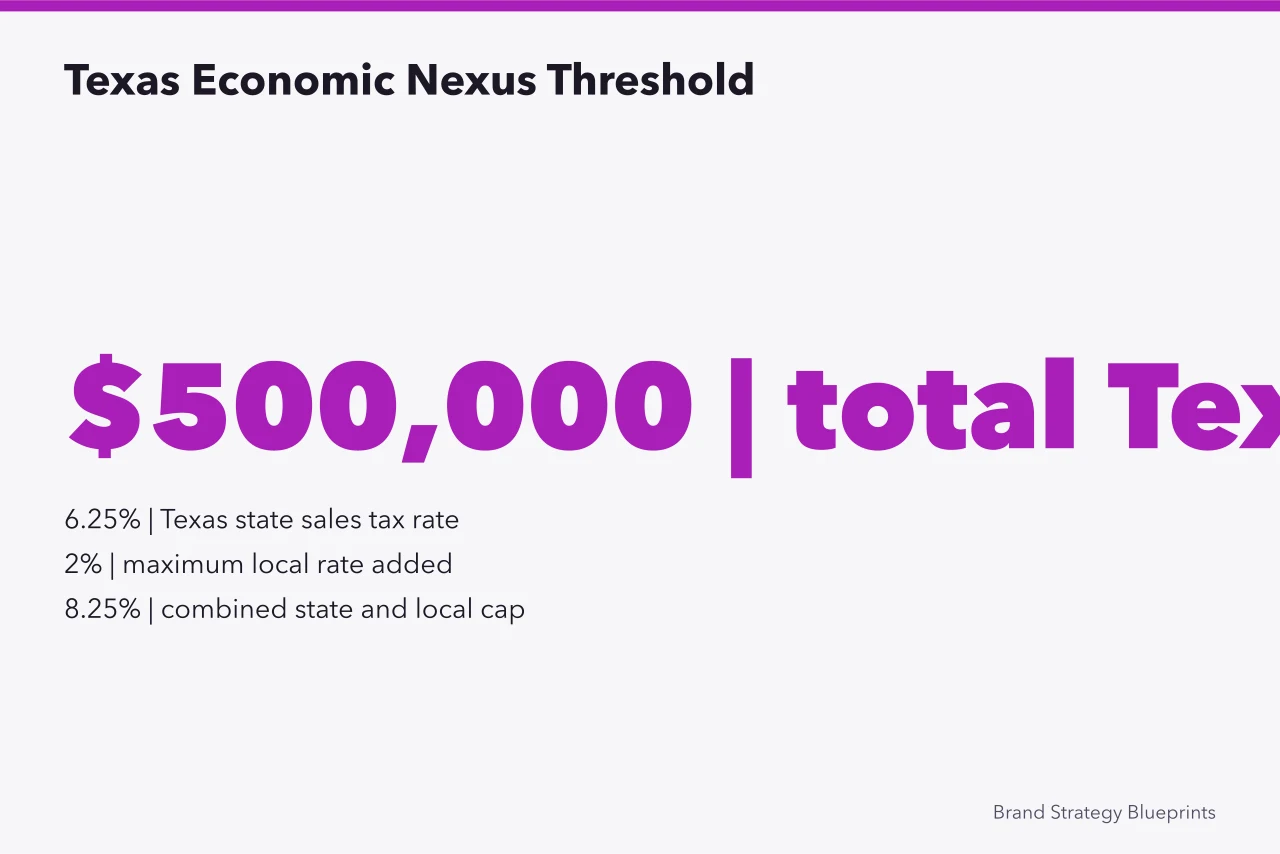
Texas measures all Texas revenue against the Comptroller's $500,000 test, taxable or not. Wholesale and exempt sales count, and combined rates are capped at 8.25 percent. A single strong quarter can cross the line.
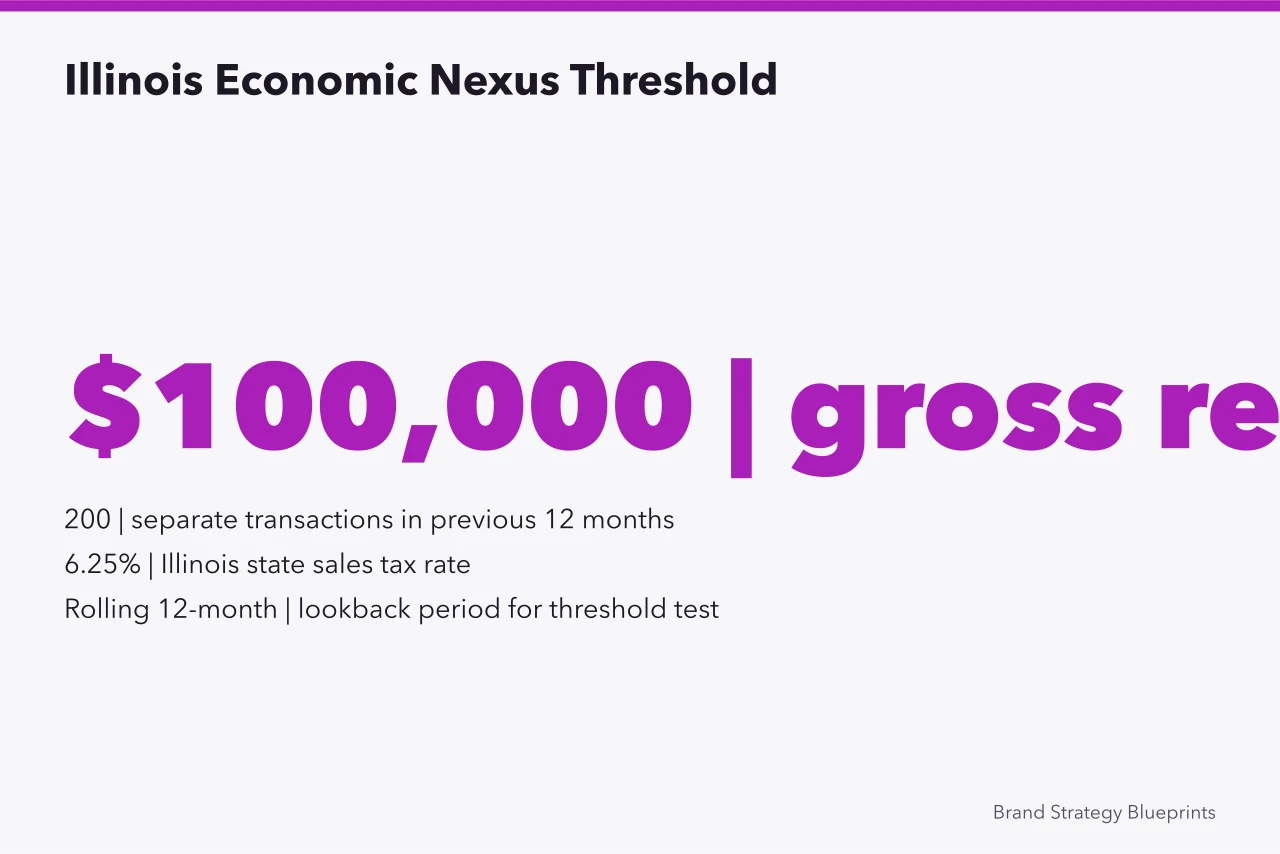
Illinois runs a rolling 12-month test of $100,000 in sales or 200 separate transactions, filed through MyTax Illinois. The test runs on sales into the state, not on profit, and marketplace volume counts toward both states.
A small seller facing the same question can follow the sales tax nexus rules for craft fair sellers, which work through one state at a time.
Mileage for registration trips and warehouse runs
Driving to a warehouse to count inventory or to your accountant to file is business mileage. The standard rate covers the trip, and the car's value never enters the calculation.
For 2025 the IRS business rate is 70 cents a mile, up from 67 cents in 2024. Publication 463 compares the flat rate with the actual expense method.
Mileage starts at your regular workplace, or at home when home is your principal place of business. Keep a log with the date, the destination and the purpose.
Two trips a month to a warehouse twelve miles away is 576 business miles a year. A sole proprietor filing jointly has one more moving part, and mileage, Section 179 and quarterly tax for a sole proprietor shows how the pieces fit.
Example: 1,800 dollars of deductible compliance costs
A sole proprietor sells through her own store and one marketplace. She pays $1,150 in state fees, $480 for filing software and $170 in postage and mileage.
Her total is $1,800. At a 22 percent marginal rate the deduction saves about $396 in federal income tax, and that figure is illustrative rather than a promise.
Compliance costs rarely arrive in one lump. A permit here and a software renewal there can pass four figures before the first return is filed.
None of it came from tax she collected. It is cash she spent, which is why it qualifies. The same arithmetic applies to a $45 annual report fee or a $30 permit amendment.
Anyone with platform income and store income has two estimates to track, and 1099 income and quarterly payments sets out the dates.
How to claim the deduction on Schedule C
The steps below keep the claim intact if the return is examined, the window the IRS usually holds open for three years.
- Separate sales tax collected from revenue in your books, so a payment to the state is never booked as an expense.
- Record each registration fee, permit and subscription on the date you pay it.
- Log every business trip with its purpose and the miles driven.
- Enter fees on line 23, software on line 18 and mileage on line 9.
- Recheck quarterly estimates once the deduction is in the books.
After the numbers are in, recalculate the year's estimated payments with Form 1040-ES so the deduction lands in the current year. A deduction that only appears on next April's return misses a year of cash flow.
Filing late turns a small fee into a penalty that is not deductible, and what a missed tax deadline costs breaks that bill into four parts.